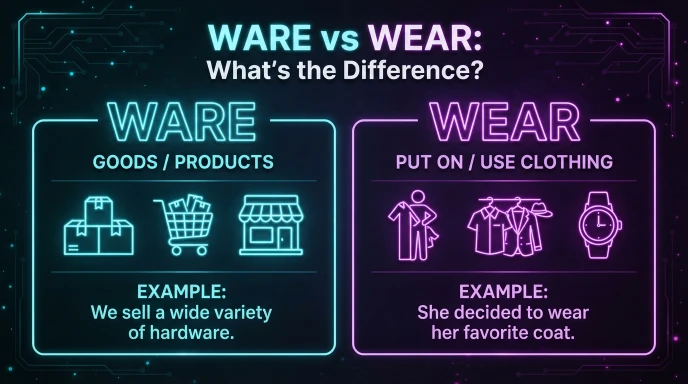
“Wear” refers to putting on clothing or the gradual damage caused by use, while “ware” refers to manufactured goods or products, such as “kitchenware” or “software.”
English is full of tricky homophones, words that sound alike but have completely different meanings and spellings, and “ware” and “wear” are a perfect example. Even confident writers sometimes pause to double-check which one fits a sentence.
“Wear,” used as a verb, means to have clothing or accessories on your body, as in “wear a jacket.” As a noun, it can also refer to damage caused over time, such as “wear and tear” on a pair of shoes.
“Ware,” on the other hand, is typically used as a noun referring to goods, merchandise, or products, often appearing in compound words like “software,” “hardware,” or “kitchenware.” Unlike “wear,” it doesn’t relate to clothing or physical damage at all.
This guide breaks down the exact differences between “ware” and “wear,” provides clear examples of correct usage, and helps you avoid mixing them up in your writing going forward.
Quick Answer:
“Wear” means to put on clothing or refers to damage from use over time, whereas “ware” means goods or merchandise, most often seen in compound words like “software” or “hardware”: the two are unrelated in meaning despite sounding identical.
Ware or Wear
Wear and ware are different words with different meanings.
- Wear means to have clothes, shoes, jewelry, or other items on your body.
- Wear can also mean damage caused by regular use.
- Ware means goods or products, often made or sold for a particular purpose.
Examples
- I wear a blue shirt.
- She likes to wear gold earrings.
- The machine shows signs of wear.
- We bought new kitchenware.
- The shop sells glassware.
- The company makes electronicware.
A simple way to remember it is:
Wear = put on or use on your body.
Ware = goods or products.
Definition and Meaning of Ware or Wear
What Does “Wear” Mean?
Wear is mainly a verb.
It means to have something on your body, such as:
- clothes
- shoes
- hats
- glasses
- watches
- jewelry
Examples:
- He wears a black jacket.
- I wear glasses every day.
- They wore formal clothes to the event.
“Wear” can also be a noun. In this use, it means damage caused by regular use.
Example:
- The tires have normal wear.
The word can also describe how something looks after repeated use.
What Does “Ware” Mean?
Ware usually refers to goods or products. It often appears as part of another word.
Common examples include:
- kitchenware
- glassware
- tableware
- hardware
- software
- cookware
- silverware
For example:
- The store sells kitchenware.
- We need new glassware for the restaurant.
- The company produces computer hardware.
In these words, “ware” is connected with goods, objects, or products.
Simple Meaning
The easiest difference is:
Wear is about using or having something on your body.
Ware is about goods or products.
The Origin of Ware or Wear
The words ware and wear come from different historical roots, even though they sound alike in modern English.
Wear comes from an old Germanic word related to putting on or carrying clothing. Similar forms appeared in older Germanic languages. Over time, the spelling and pronunciation developed into the modern English word “wear.”
Ware has a different history. It comes from an old English word connected with goods, objects, or things that were made or sold. This meaning can still be seen in words such as “tableware” and “glassware.”
The spelling difference exists because these are not two spellings of the same word. They are separate words that developed from different roots.
Their pronunciation creates the main problem. In standard English, ware and wear are normally pronounced the same. This makes them homophones: words that sound alike but have different meanings and spellings.
British English vs American English Spelling
There is no major British-versus-American spelling difference between “ware” and “wear.”
Both British English and American English use:
- wear for clothing and use-related meanings
- ware for goods and products
| Meaning | British English | American English |
| Put clothes on | wear | wear |
| Have clothes on | wear | wear |
| Damage from use | wear | wear |
| Goods or products | ware | ware |
| Kitchen products | kitchenware | kitchenware |
| Glass products | glassware | glassware |
| Table products | tableware | tableware |
| Computer equipment | hardware | hardware |
The main differences between British and American English appear in other words, such as colour/color or centre/center. They do not normally affect ware and wear.
Which Spelling Should You Use?
Your choice depends on the meaning, not the country where you write.
For US English
Use wear when talking about clothing, accessories, or damage from use.
- I wear sneakers every day.
- The chair shows signs of wear.
Use ware when talking about goods or products.
- The store sells kitchenware.
For UK and Commonwealth English
The same rule applies.
- She wears a red dress.
- The shop sells tableware.
For Global English
If you write for an international audience, focus on meaning. There is no need to change ware to wear, or wear to ware, based on regional spelling.
The correct word depends on the sentence.
Common Mistakes with Ware or Wear
Because the words sound alike, several mistakes are common.
Mistake 1: “I ware a jacket.”
Incorrect:
“I ware a jacket.”
Correct:
“I wear a jacket.”
Mistake 2: “The shop sells kitchenwear.”
Incorrect:
“The shop sells kitchenwear.”
Correct:
“The shop sells kitchenware.”
Mistake 3: “These shoes show normal ware.”
Incorrect:
“These shoes show normal ware.”
Correct:
“These shoes show normal wear.”
Mistake 4: “I need new glasswear.”
Incorrect:
“I need new glasswear.”
Correct:
“I need new glassware.”
Easy Memory Trick
Think:
Wear = what you wear.
Ware = what you buy as goods.
This simple rule will solve most spelling problems.
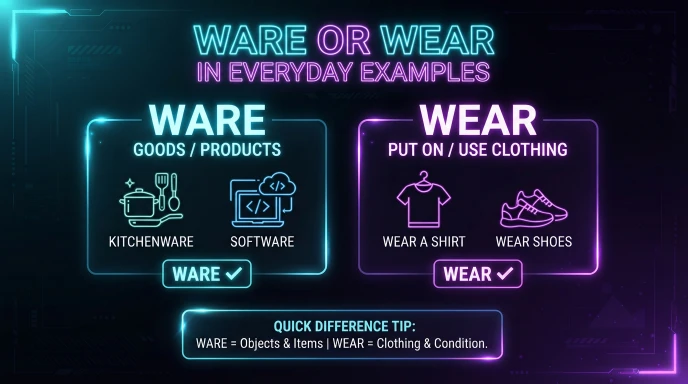
Ware or Wear in Everyday Examples
In Emails
Correct:
Please let me know what to wear for the meeting.
Correct:
We need to order new tableware for the event.
In News Writing
Correct:
The company reported increased wear on its equipment.
Correct:
The retailer launched a new range of kitchenware.
On Social Media
Correct:
What should I wear tonight?
Correct:
I love this new tableware set!
In Formal Writing
Correct:
Regular wear can reduce the life of the product.
Correct:
The business supplies high-quality glassware to restaurants.
In Shopping
You wear clothes.
You buy ware.
For example:
- wear shoes
- wear a coat
- wear jewelry
- buy cookware
- buy tableware
- buy glassware
Ware or Wear :Google Trends & Usage Data
Search interest for “wear” is generally much higher than “ware” because “wear” has several common meanings and appears in everyday conversations about clothing, fashion, health, products, and general use.
The word wear is especially common in searches connected with:
- clothing
- fashion
- shoes
- outfits
- watches
- jewelry
- work clothing
- sports clothing
The word ware is more common in searches related to products and categories, such as:
- kitchenware
- cookware
- glassware
- tableware
- hardware
- software
Google Trends compares search interest using a normalized scale rather than showing the total number of searches. This means a Trends score should not be treated as an exact search-volume figure.
Across major English-speaking markets, wear usually has broader everyday use. Ware tends to appear more often in product-related searches and compound words.
The context matters more than the spelling itself. Someone searching for clothing is likely looking for wear, while someone searching for household products may be looking for ware.
Ware and Wear: Comparison
| Word | Main Meaning | Common Use | Example |
| wear | Put on or have something on | Clothes and accessories | I wear a coat. |
| wear | Damage from use | Products and machines | The tires show wear. |
| ware | Goods or products | Shopping and products | We sell kitchenware. |
| -ware | Product category or type | Compound words | The store sells glassware. |
Quick Comparison
| Wear | Ware |
| Clothing | Goods |
| Shoes | Products |
| Jewelry | Product categories |
| Accessories | Kitchenware |
| Damage from use | Glassware |
| “I wear a shirt.” | “I bought tableware.” |
FAQs
What does “ware” mean?
“Ware” refers to manufactured goods, products, or merchandise, typically used in compound words like “software,” “hardware,” “kitchenware,” or “glassware.” On its own, it’s rarely used outside these combinations in everyday English.
Which is correct: “ware down” or “wear down”?
The correct phrase is “wear down,” meaning to gradually weaken, tire, or erode something over time. For example, “Years of stress began to wear down her patience.” “Ware down” is incorrect since “ware” isn’t used as a verb
What is a ware item?
A “ware item” typically refers to a product or piece of merchandise, often part of a specific category, such as glassware, tableware, or software. The term usually appears in retail, manufacturing, or product-related contexts rather than casual conversation.
Which is correct: “ware out” or “wear out”?
“Wear out” is correct, meaning something becomes damaged, weak, or unusable after continued use, as in “These shoes wear out quickly.” Since “ware” isn’t a verb, “ware out” is grammatically incorrect.
When to use wear or ware?
Use “wear” when referring to putting on clothing or accessories, or describing damage from use, such as “wear a coat” or “wear and tear.” Use “ware” only when referring to goods or products, almost always within compound nouns like “hardware” or “software.”
Is it ware off or wear off?
“Wear off” is correct, describing something that gradually fades, diminishes, or loses effect over time, such as “The medicine’s effect will wear off in a few hours.” “Ware off” is not a valid phrase in English.
Conclusion
The difference between ware or wear is simple once you connect each word with its meaning. Wear is used for putting on clothes or accessories and for damage caused by regular use. Ware refers to goods, products, or product categories. You can see it in words such as kitchenware, glassware, tableware, and hardware.
These words are often confused because they sound the same. However, they are spelled differently because they come from different historical roots. There is also no important British or American spelling difference between them.
When writing, focus on the meaning. If you are talking about clothes, use wear. If you are talking about goods or products, use ware. Remembering this small rule can prevent common spelling mistakes in emails, schoolwork, business writing, product descriptions, and social media posts.
Explore This Topic!
Guard or Gaurd: Which Spelling Is Correct?

I’m Daniel Carter, a language writer and grammar enthusiast who enjoys making English simple and easy to understand. I write about grammar, spelling, word usage, and common mistakes to help readers use English with more confidence.